
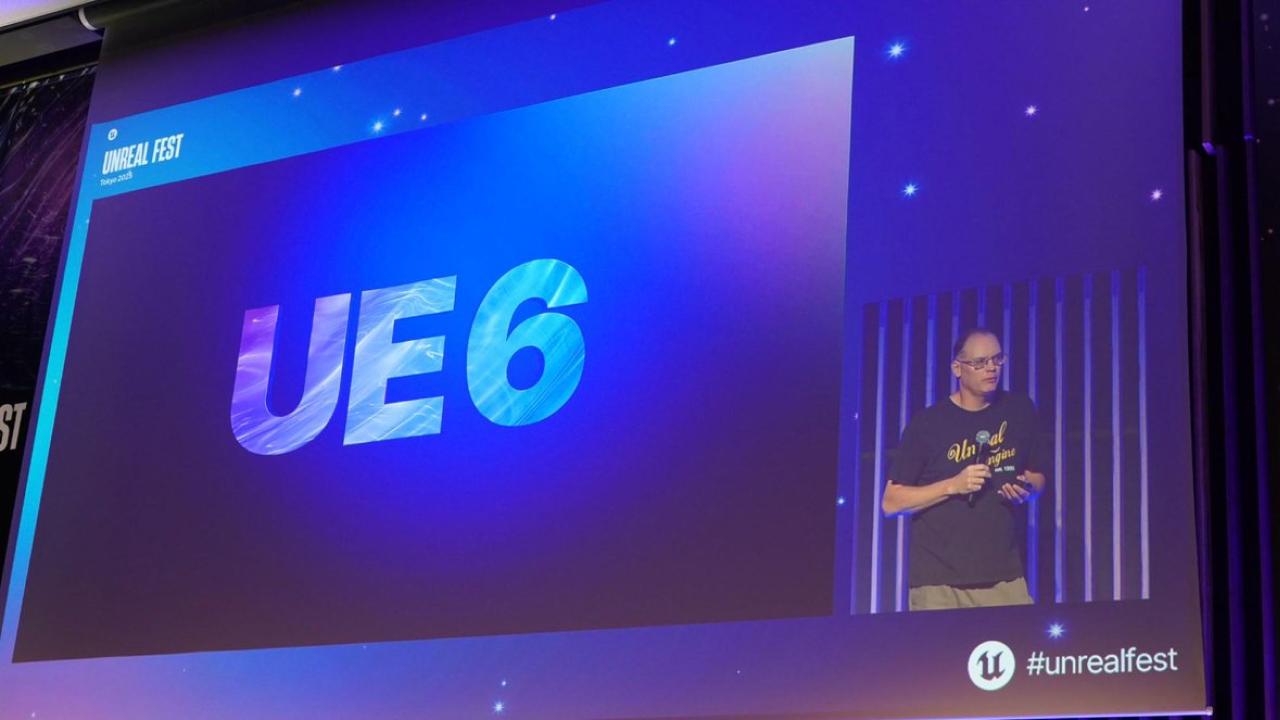
At its State of Unreal 2026 presentation in Chicago, Epic Games revealed the first major details about Unreal Engine 6, a next-generation platform that could fundamentally change how games are built. Rather than focusing solely on graphical improvements, Epic is positioning UE6 as an engine designed around AI, massive-scale multiplayer worlds, interoperability, and creator collaboration.
For developers, the biggest headline was not graphics.
It was AI.
Epic officially showcased deeper AI integration, including support for external large language models such as Claude, Codex, Gemini, and other AI systems through new tooling introduced in Unreal Engine 5.8 and planned for future UE6 workflows.
Unreal Engine 6 Is Officially Real
Epic CEO Tim Sweeney confirmed that Unreal Engine 6 is now in active development.
According to Epic, UE6 is not simply “UE5 with better graphics.”
Instead, it represents the merger of two previously separate ecosystems:
- Unreal Engine 5
- Unreal Editor for Fortnite (UEFN)
The goal is to create a single unified platform that combines the power of AAA development with Fortnite’s creator ecosystem.
Epic describes UE6 as the future foundation for both traditional games and large-scale online experiences.
The Biggest Change: AI Enters the Development Pipeline
One of the most discussed announcements from State of Unreal was Epic’s AI strategy.
With Unreal Engine 5.8, Epic introduced an experimental Model Context Protocol (MCP) plugin that allows AI models to connect directly to Unreal Engine tools and workflows.
Epic demonstrated how developers can connect models such as:
- Claude
- Codex
- Gemini
to Unreal Engine and interact with projects using natural language.
Instead of manually creating every task, developers could potentially instruct AI to:
- Place assets in levels.
- Generate environment layouts.
- Organize content.
- Configure lighting.
- Assist with scripting.
- Build gameplay prototypes.
all through conversational commands.
Claude and Codex Integration Explained
For many developers, the integration of Claude and Codex was the most surprising announcement.
Epic demonstrated a workflow where AI systems can operate alongside the editor and interact with Unreal Engine through MCP connections.
In practical terms, this means developers could potentially ask AI:
“Create a medieval village.”
or
“Populate this environment with props.”
and receive automated assistance directly inside the editor.
While Epic emphasized that these tools are designed to assist rather than replace developers, the demonstration immediately became one of the most talked-about moments of the event.
Verse Becomes the Future of Unreal Programming
Perhaps the most significant technical announcement involves programming itself.
Epic confirmed that UE6 will transition toward Verse, the programming language originally introduced through UEFN. Verse is intended to become the foundation of Unreal Engine’s future gameplay systems.
According to Epic, Verse offers:
- Better scalability.
- Improved multiplayer support.
- Transactional programming.
- Persistent world capabilities.
- Easier collaboration among large teams.
The company believes Verse will enable game worlds containing thousands of contributors and significantly larger online experiences than current technology allows.
What Happens to Blueprints?
This quickly became one of the most controversial topics.
Epic stated that Blueprints will remain available during the early phases of UE6, but industry reports suggest the long-term focus is shifting toward Verse and new programming systems.
Many developers expressed concern because Blueprints have been one of Unreal Engine’s most accessible features for:
- Indie developers.
- Students.
- Designers.
- Non-programmers.
The announcement triggered extensive debate across development communities. Some see Verse as a natural evolution, while others fear Blueprints may gradually lose importance.
Massive Multiplayer Worlds Are a Core Goal
Epic also revealed ambitions that go far beyond current multiplayer limitations.
Today, many large multiplayer games are limited by server architecture and player counts.
UE6 aims to support:
- Far larger simulations.
- Distributed server systems.
- Massive persistent worlds.
- Significantly larger player populations.
Tim Sweeney suggested the long-term goal is technology capable of scaling across huge numbers of machines rather than being restricted by a single server.
For MMO and live-service developers, this could be one of the most important aspects of UE6.
Fortnite and Unreal Engine Become One Ecosystem
Another major announcement involves interoperability.
Epic wants content, code, assets, and even economies to become portable across different experiences. UE6 will merge the traditional Unreal Engine ecosystem with Fortnite’s creator platform.
One example showcased by Epic was the possibility of using Fortnite cosmetics across multiple UE6-powered experiences.
The company believes this approach could create a more connected ecosystem where player identities and digital assets move between games.
Rocket League Becomes the First UE6 Showcase
Interestingly, Epic chose Rocket League rather than Fortnite to demonstrate the first public glimpse of Unreal Engine 6.
The reveal teaser showcased upgraded visuals and marked the beginning of Rocket League’s transition into the next generation of Epic technology.
For many developers, this served as proof that UE6 development is already progressing beyond concept stages.
Community Reaction Is Divided
The response from developers has been mixed.
Supporters argue that:
- AI will accelerate development.
- Small teams can achieve more.
- Automation will reduce repetitive tasks.
- Verse enables better scalability.
Critics worry about:
- Over-reliance on AI.
- The future of Blueprint workflows.
- Creative jobs being replaced.
- Increased pressure to automate production.
The debate has become one of the most discussed topics following Unreal Fest.
When Will Unreal Engine 6 Release?
Epic has not announced a final release date.
However, current plans suggest:
- UE5.8 serves as a transition release.
- UE6 development continues through 2027.
- Early Access is expected in late 2027.
- Full release may follow roughly 12–18 months later.
That means most developers will continue working with UE5 for the foreseeable future while Epic builds the foundations of UE6.
Why This Matters for the Industry
Unlike previous engine generations that focused heavily on graphics, Unreal Engine 6 appears to be centered around three ideas:
- AI-assisted creation.
- Massive-scale online experiences.
- Unified creator ecosystems.
Epic believes these changes will fundamentally alter how games are developed, operated, and shared across platforms.
If successful, UE6 could become one of the most significant technology shifts in game development since the launch of Unreal Engine 4.
Conclusion
Epic Games’ State of Unreal 2026 presentation was less about prettier graphics and more about redefining the development process itself. With Claude and Codex integration, AI-assisted workflows, Verse programming, massive multiplayer ambitions, and the merger of Unreal Engine with UEFN, UE6 represents Epic’s most ambitious vision yet.
For developers around the world, the message from Epic is clear: the future of game development will be increasingly collaborative, increasingly AI-assisted, and increasingly connected. Whether that future excites or concerns creators, Unreal Engine 6 has already become one of the most important technology stories of 2026.