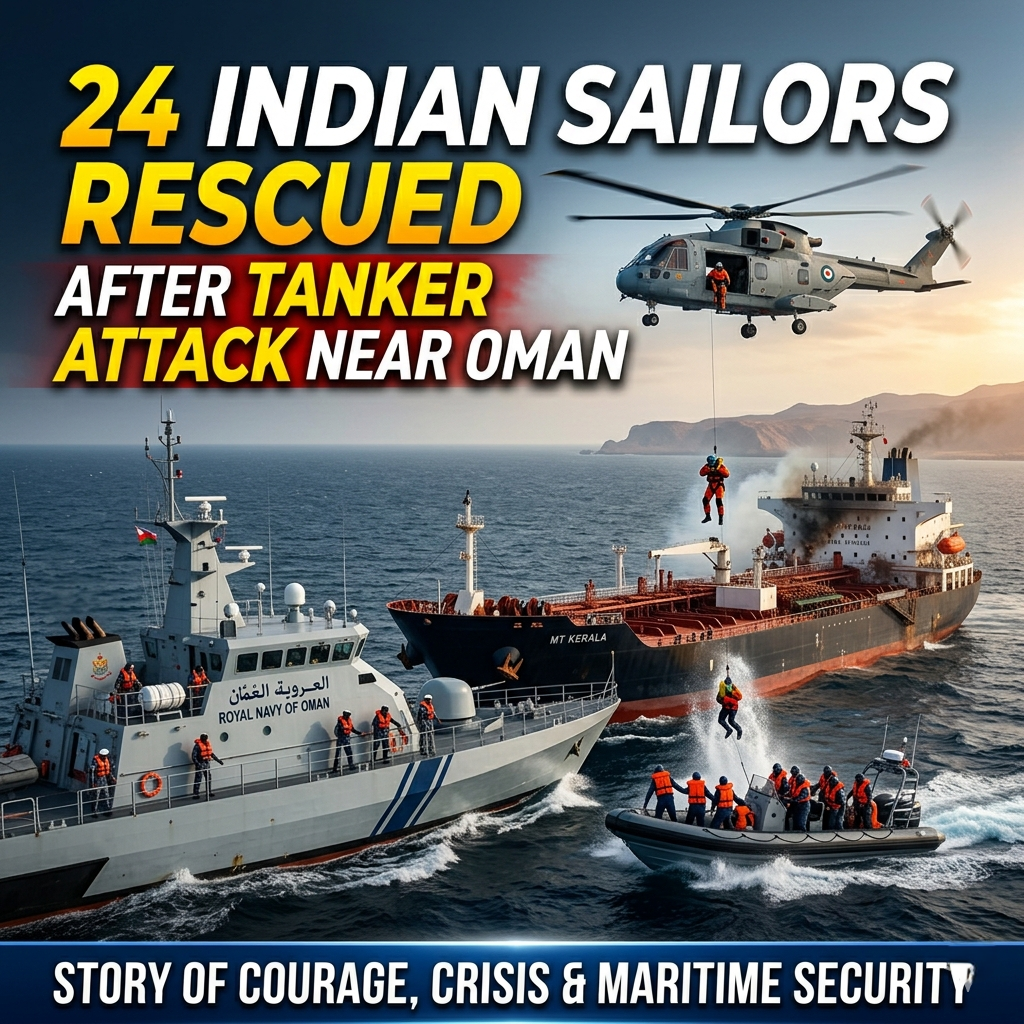
24 Indian Sailors Safely Rescued After Tanker Incident Near Oman
In a dramatic maritime rescue operation, 24 Indian sailors were safely evacuated after the merchant tanker MT Marivex came under a suspected missile attack and caught fire near the coast of Oman. The incident has once again highlighted the growing security concerns in the Gulf region and the risks faced by thousands of Indian seafarers working on international vessels.
The tanker was reportedly anchored near Masirah Island, Oman, when the attack occurred. All crew members aboard the vessel were Indian nationals. Thanks to swift coordination between Indian and Omani authorities, every crew member was rescued without any reported casualties.
What Happened to the MT Marivex?
According to reports, the Palau-flagged tanker MT Marivex suffered severe damage after a suspected missile strike. A fire broke out onboard, creating a dangerous situation for the crew. The vessel was located off the Omani coast in a strategically sensitive maritime zone close to the Gulf of Oman and the Strait of Hormuz.
The Maritime Rescue Coordination Centre (MRCC) in Mumbai received information about the emergency from a relative of one of the sailors onboard. Recognizing the seriousness of the situation, Indian authorities immediately contacted the Oman Maritime Search and Rescue Centre (OMSC) to launch an emergency rescue mission.
How the Rescue Operation Was Conducted
The rescue operation demonstrated excellent international coordination.
Omani authorities quickly responded by:
- Deploying rescue helicopters
- Diverting nearby vessels toward the emergency location
- Coordinating with Indian maritime authorities
- Monitoring the damaged tanker continuously
Within hours, all 24 Indian crew members were safely evacuated using helicopters operated by Omani rescue teams. The rescued sailors were moved to safety, and no injuries were reported.
This successful operation serves as an example of how maritime nations can work together during emergencies at sea.
Why Is the Gulf of Oman So Important?
The Gulf of Oman is one of the world’s most strategically significant waterways.
It connects directly to the Strait of Hormuz, a narrow passage through which a substantial portion of global oil shipments travels every day. Any military conflict, missile attack, or disruption in this region immediately attracts global attention because it can affect:
- International trade
- Oil prices
- Global energy supply chains
- Maritime transportation routes
Because of its strategic importance, the region frequently experiences geopolitical tensions involving multiple countries and naval forces. Maritime experts have long warned that commercial ships operating in these waters face increasing security risks.
Growing Risks for Indian Seafarers
India is one of the largest suppliers of maritime professionals in the world.
More than hundreds of thousands of Indian seafarers work on cargo ships, oil tankers, container vessels, and merchant fleets across international waters. These professionals often operate in regions affected by political conflicts, piracy threats, and military tensions.
The MT Marivex incident is a reminder that Indian sailors frequently work far from home in environments where sudden emergencies can occur. Despite advances in navigation and communication technology, maritime workers remain vulnerable to regional conflicts.
Their contribution to global trade often goes unnoticed, yet incidents like this reveal the crucial role they play in keeping international commerce moving.
Questions Surrounding the Attack
While investigations are still ongoing, reports suggest that the tanker may have been linked to routes associated with Iranian oil trade. Some international reports indicate that the vessel had previously come under scrutiny because of sanctions-related concerns. However, official investigations are expected to determine the exact circumstances behind the attack.
What remains clear is that the safety of the crew became the top priority, and rescue efforts succeeded in preventing a potential maritime tragedy.
The Role of India and Oman
The incident has also highlighted the strong maritime cooperation between India and Oman.
For decades, both countries have maintained close ties in areas such as:
- Maritime security
- Naval cooperation
- Trade and logistics
- Search and rescue operations
The rapid response by Omani authorities and the coordination with Indian agencies ensured that the situation was handled professionally and effectively.
Such partnerships are becoming increasingly important as maritime threats continue to evolve across international shipping lanes.
What This Incident Means for Global Shipping
The rescue of the 24 Indian sailors is undoubtedly positive news. However, the event raises important questions about the future of maritime security in conflict-prone regions.
Shipping companies may now face greater pressure to:
- Strengthen vessel security measures
- Improve emergency response planning
- Monitor geopolitical developments more closely
- Enhance crew safety protocols
As international tensions continue to affect key shipping corridors, governments and maritime organizations will need to invest more heavily in protecting commercial vessels and their crews.
Conclusion
The successful rescue of 24 Indian sailors from the damaged tanker MT Marivex near Oman is a powerful story of courage, coordination, and international cooperation. While the attack underscores the growing security challenges in the Gulf region, it also demonstrates how quick action by rescue agencies can save lives during maritime emergencies.
As the rescued crew members prepare to return home, their survival stands as a testament to the dedication of maritime rescue teams and the importance of global cooperation in ensuring the safety of seafarers. In a world where international trade depends heavily on maritime routes, protecting those who work at sea remains more important than ever.