
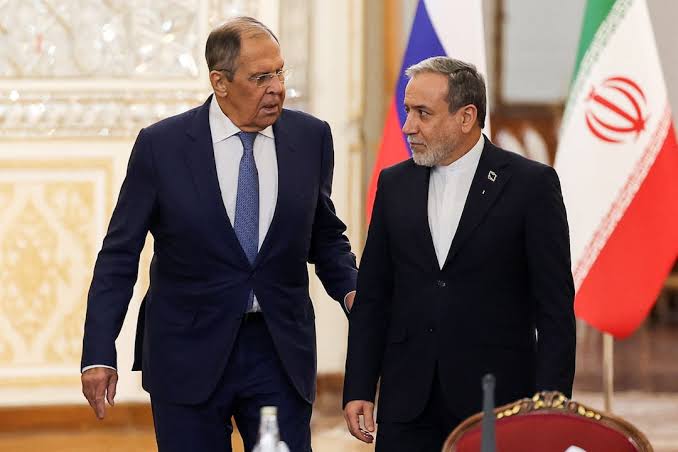
Diplomacy Continues Despite the Threat of Another Major Conflict
The Middle East is facing renewed uncertainty as the United States and Iran continue indirect diplomatic contacts while the risk of a return to large-scale military confrontation remains high.
As of November 2, 2026, Iranian representatives had left Qatar after several days of discussions, but communication between Tehran and Washington was continuing through mediators.
The central issue is whether the two countries can reach an agreement that reduces the immediate military threat, restores shipping through the strategically important Strait of Hormuz and creates a framework for further negotiations.
Iran has reportedly proposed reopening the waterway to shipping within two days if the United States meets several conditions. Washington has not yet accepted the proposal, and major disagreements remain over the nuclear programme and the wider security situation.
The situation has become particularly sensitive because commercial shipping in the Strait of Hormuz has faced increased attacks and threats during the conflict.
The waterway is one of the world’s most important energy routes. Any prolonged disruption could affect oil and gas supplies, increase transportation costs and create economic pressure across countries that depend on imported energy.
The diplomatic situation is also complicated by Israel’s position. US President Donald Trump said he had a positive telephone conversation with Israeli Prime Minister Benjamin Netanyahu, during which Iran was discussed. However, neither leader provided a detailed public account of the conversation.
Meanwhile, Iran’s new Supreme Leader, Ayatollah Mojtaba Khamenei, has issued strong warnings about the consequences of any further attack on the country.
The developments highlight a difficult situation: diplomatic channels remain open, but military threats and regional tensions continue to shape the decisions of governments across the Middle East.
Why the Strait of Hormuz Is So Important
The Strait of Hormuz is one of the most strategically important maritime passages in the world.
It connects the Persian Gulf with the Gulf of Oman and the wider Arabian Sea. Several major energy-producing countries rely on the route to transport oil and gas to international markets.
Countries such as Saudi Arabia, Iraq, Kuwait, Qatar, the United Arab Emirates and Iran are closely connected to the region’s energy trade.
A significant share of the world’s internationally traded oil passes through this narrow waterway. Liquefied natural gas shipments also depend heavily on access to the route.
This makes the Strait of Hormuz a critical point in global energy security.
If shipping is interrupted, the consequences can spread rapidly beyond the Middle East.
Oil prices may rise because traders fear that supplies will become harder to obtain. Shipping companies may face higher insurance costs or choose alternative routes where possible. Energy-importing countries may need to purchase more expensive supplies from other producers.
The impact is particularly important for countries that depend heavily on imported crude oil.
India, China, Japan and several European economies have significant interests in maintaining the free movement of energy shipments.
For these countries, a prolonged disruption could increase import costs, put pressure on domestic currencies and complicate efforts to control inflation.
The Strait is therefore not merely a regional security issue. It is a central part of the global economy.
What Is Happening in the Latest US–Iran Talks?
The latest diplomatic efforts have involved Qatar acting as an intermediary between Washington and Tehran.
Iranian officials said their delegation had left Qatar after several days of discussions. However, communication with the United States was continuing through the mediator.
The purpose of the diplomatic effort is to prevent another escalation and explore conditions under which commercial shipping can resume safely.
Iran has reportedly proposed that the Strait of Hormuz could be fully reopened within two days if Washington agrees to several conditions.
The proposal is significant because it links the immediate issue of maritime access with broader political and security negotiations.
However, the two countries have not reached an agreement.
The United States wants any wider diplomatic settlement to address Iran’s nuclear programme and prevent Tehran from obtaining a nuclear weapon.
Iran, on the other hand, wants to discuss the nuclear issue at a later stage and is seeking answers to its own conditions before agreeing to a wider framework.
These differences are substantial.
Washington sees the nuclear issue as a central part of regional security. Tehran considers the order and scope of negotiations important and has resisted the idea that every issue should be addressed simultaneously.
The diplomatic process must therefore overcome disagreements not only about the final outcome but also about the sequence in which different subjects are discussed.
Trump’s Conversation With Netanyahu Adds Another Dimension
US President Donald Trump said on November 1 that he had held a positive conversation with Israeli Prime Minister Benjamin Netanyahu.
Trump described the call as very good and confirmed that Iran was among the subjects discussed.
However, he did not reveal the details of the conversation.
The discussion matters because Israel has been directly involved in the military confrontation with Iran and has its own security concerns regarding Tehran’s military capabilities and nuclear programme.
The relationship between Washington and Jerusalem is therefore central to any diplomatic effort.
Even if the United States and Iran reach an understanding, the agreement’s long-term stability may depend partly on whether Israel considers it sufficient to protect its security interests.
At the same time, Israeli domestic politics are also changing. Netanyahu’s political bloc has lost its parliamentary majority following the latest election, creating additional uncertainty about the country’s political direction.
The possibility of renewed conflict has become a concern because military escalation could affect not only Iran and Israel but also neighbouring Gulf countries.
The United States must therefore balance its support for Israel, its security interests and its stated interest in preventing another major war.
Iran’s New Supreme Leader Issues a Strong Warning
Iran’s new Supreme Leader, Ayatollah Mojtaba Khamenei, has taken a firm public position during the latest period of uncertainty.
He reportedly met with military leaders and said that any threat from the United States or Israel should receive an immediate response.
His statement also suggested that Iran’s potential list of targets should be expanded.
The comments were intended to demonstrate that Tehran remains prepared for military confrontation even while diplomatic communication continues.
Iranian security chief Mohsen Rezaei also warned that an attack would lead to devastating retaliation using new weapons.
These statements have increased concern about the possibility of a wider conflict.
However, strong public rhetoric does not necessarily mean that military action is inevitable. Governments sometimes use warnings as a negotiating tool, particularly when they want to demonstrate strength while discussions are taking place.
The difficulty is that such statements can also reduce diplomatic flexibility. If leaders make strong public promises, it can become politically harder for them to accept compromises.
The Iranian leadership must therefore manage two objectives at the same time: demonstrating that the country will defend itself and preserving enough diplomatic space to reach an agreement.
The Nuclear Programme Remains the Biggest Disagreement
The nuclear issue is one of the most difficult parts of the US–Iran relationship.
Washington wants to prevent Iran from developing a nuclear weapon and believes that any agreement must include meaningful restrictions and verification arrangements.
Iran has consistently maintained that its nuclear programme is peaceful.
The two sides also disagree over when the nuclear issue should be addressed in the current diplomatic process.
The United States wants the subject included in the wider negotiations. Iran has indicated that it would prefer to address it later.
This disagreement matters because the nuclear programme is closely connected to the wider regional security situation.
An agreement that focuses only on shipping may reduce immediate economic pressure but leave the larger strategic dispute unresolved.
On the other hand, attempting to resolve every disagreement in a single negotiation may make an immediate agreement more difficult.
Diplomats therefore face a question of sequencing: should they first secure a limited arrangement that reduces the risk of military escalation, or should they insist on a comprehensive agreement covering nuclear restrictions, sanctions and regional security?
Both approaches have advantages and disadvantages.
A limited agreement may provide immediate relief but could prove fragile. A comprehensive agreement could address deeper issues but would be harder to negotiate.
Why Qatar Is Playing an Important Role
Qatar has become an important diplomatic intermediary in the Middle East.
Its geographic position, relationships with different regional actors and experience in mediation have allowed it to play a role in several sensitive negotiations.
In the current situation, Qatar is helping maintain communication between the United States and Iran.
Mediation is especially valuable when two governments do not have a direct or trusted diplomatic channel.
A mediator can carry messages, clarify positions and help identify areas where compromise may be possible.
However, Qatar cannot force either side to accept an agreement.
The success of the process ultimately depends on decisions made in Washington and Tehran, as well as the positions of other regional governments.
Other countries are also concerned about the situation.
The United Arab Emirates, Saudi Arabia and neighbouring Gulf states have significant security and economic interests in preventing another escalation.
The Manama Dialogue, a major regional security conference held in Bahrain, has also reflected the seriousness of the situation.
Officials from the region have warned that another escalation could be more destructive than previous confrontations.
Commercial Shipping and the Threat to Global Energy Markets
The Strait of Hormuz has become a major concern for shipping companies and energy markets.
Reports of attacks on commercial vessels increased during October, making it the busiest month for reported assaults since the early weeks of the conflict in March.
This has created additional uncertainty for companies operating in the region.
Shipping businesses must consider the safety of crews, insurance coverage, vessel availability and the possibility of delays.
Even when a ship is not directly attacked, the threat of an incident can increase operating costs.
Insurance providers may demand higher premiums for vessels travelling through high-risk waters. Companies may also consider changing routes or delaying shipments until conditions improve.
These decisions can influence the cost of transporting oil and gas.
For energy-importing countries, the result may be higher prices even if the physical supply of oil remains available.
Markets often react to the possibility of future shortages rather than waiting for a complete disruption to take place.
This explains why diplomatic developments can influence oil prices even before an agreement is reached.
What This Means for India
India has a major interest in the stability of the Strait of Hormuz.
The country imports a large proportion of its crude-oil requirements and depends on international energy markets to support transportation, electricity generation, manufacturing and other economic activities.
A prolonged disruption in the region could increase the cost of imported energy.
Higher oil prices can place pressure on India’s trade balance because the country needs to spend more foreign currency to purchase the same quantity of crude.
If the rupee weakens at the same time, the cost of imports can increase further.
The effects may eventually reach fuel prices, transportation, logistics and industrial production.
India also has diplomatic and economic relationships with several countries in the region, making stability important beyond the energy market.
Indian citizens work across the Gulf region, and millions of families maintain financial and personal connections with countries in the Middle East.
A wider conflict could therefore create humanitarian and economic consequences for India.
New Delhi has an interest in encouraging diplomatic solutions and protecting the safety of its citizens and commercial interests.
China’s Diplomatic Involvement
China has also indicated that it intends to play a diplomatic role.
The Chinese government announced that it would send a special envoy to Iran, Oman and Saudi Arabia in early to mid-November.
China has significant economic interests in the region and depends on stable energy supplies.
It also maintains relationships with several governments involved in the wider dispute.
The decision to send an envoy reflects Beijing’s interest in preventing the Gulf from becoming a wider arena for international confrontation.
China has called for a return to dialogue and has warned against allowing geopolitical rivalry to destabilise the region.
Its diplomatic role could become important if the current negotiations require additional support or guarantees.
However, China’s influence will depend on whether the United States, Iran and regional governments are willing to accept its involvement.
What Could Happen Next?
Several possible outcomes remain open.
The most positive scenario would involve a negotiated arrangement that restores commercial shipping through the Strait of Hormuz and reduces the immediate threat of military escalation.
Such an agreement could help lower energy-market uncertainty and provide a foundation for further talks.
A second possibility is a limited arrangement that addresses maritime security but leaves the nuclear issue unresolved.
This could reduce the immediate danger while allowing both countries to continue negotiating over more difficult questions.
A third possibility is that the diplomatic process fails and military tensions increase.
If that happens, the Strait of Hormuz could remain a major source of uncertainty for shipping companies and energy markets.
The risk of a wider confrontation would also increase, particularly if attacks on commercial vessels continue or military forces become directly involved.
For now, the diplomatic process remains active, but there is no confirmed comprehensive agreement.
Conclusion: A Narrow Diplomatic Window Remains Open
The latest US–Iran developments show how diplomacy and military threats can exist at the same time.
Iranian representatives have left Qatar, but indirect communication continues. Tehran has proposed reopening the Strait of Hormuz under certain conditions, while Washington continues to insist that the nuclear programme must be addressed.
Israel’s security concerns, Trump’s conversations with Netanyahu and the involvement of Gulf countries make the situation more complicated.
China’s decision to send an envoy also demonstrates that the consequences of the conflict extend far beyond the immediate region.
The Strait of Hormuz remains the most immediate economic concern because any prolonged disruption could affect international energy supplies and raise costs for importing countries.
For India and other energy-dependent economies, a diplomatic settlement would provide important economic relief.
However, the success of the negotiations will depend on whether the governments involved can move beyond public threats and agree on practical measures.
The coming days will be important. The diplomatic channels remain open, but the risk of renewed conflict has not disappeared.