New Delhi, October 7, 2026: The political confrontation between the Congress-led Opposition and the Election Commission of India (ECI) has intensified over the Special Intensive Revision (SIR) of electoral rolls, with Congress leader and Leader of Opposition Rahul Gandhi leading protests in the national capital. The demonstrations have involved INDIA bloc MPs and opposition leaders, with the main focus being allegations of voter deletions, transparency in the electoral-roll revision process and demands for accountability from the Election Commission.
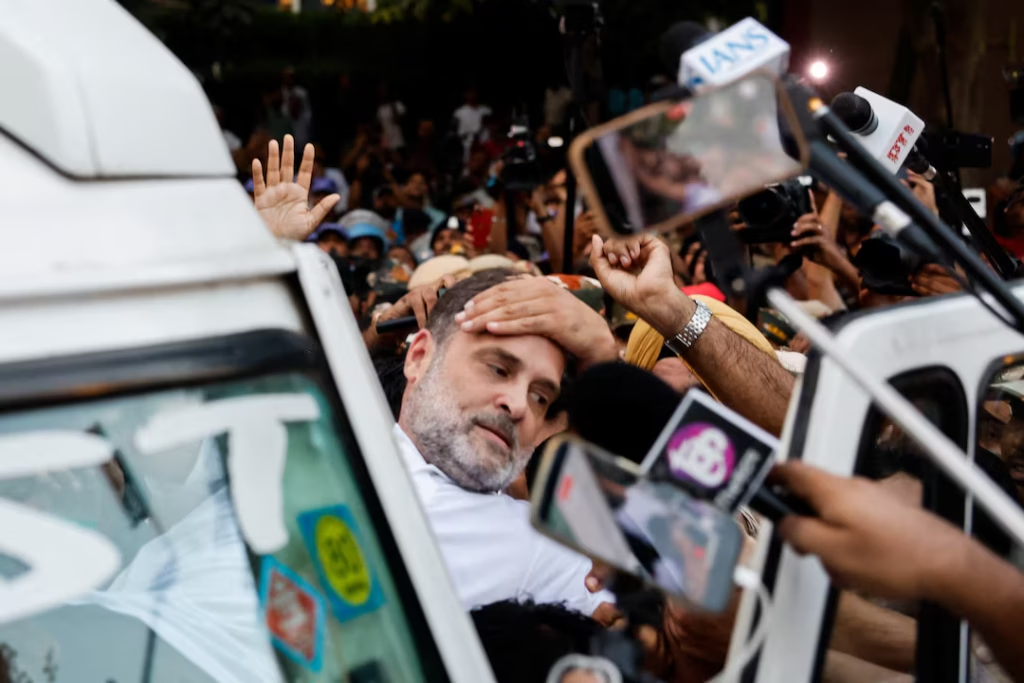
The latest confrontation took place on October 7, when Rahul Gandhi and several opposition lawmakers were detained by Delhi Police while attempting to proceed towards Jantar Mantar for another protest. The action came a day after Gandhi, Priyanka Gandhi Vadra and other opposition leaders staged an extended sit-in near Akashvani Bhawan after an INDIA bloc march towards the Election Commission headquarters was stopped by police.
What Is the SIR Issue?
At the centre of the controversy is the Special Intensive Revision of electoral rolls, an exercise being conducted by the Election Commission to verify and update voter lists.
The Election Commission has said that the purpose of SIR is to ensure that electoral rolls remain accurate and contain eligible voters while removing entries relating to deceased, shifted, duplicate or otherwise ineligible voters. The exercise involves verification at the grassroots level, including house-to-house verification by Booth Level Officers.
The process has nevertheless generated significant political controversy because of the number of names that have not appeared in draft electoral rolls in different states and Union Territories.
The Supreme Court has previously examined challenges surrounding SIR in Bihar and upheld the Election Commission’s authority to conduct the exercise, while emphasising safeguards for voters and mechanisms through which eligible citizens can establish their eligibility.
Why Is Rahul Gandhi Protesting?
Rahul Gandhi and opposition parties have argued that the revision process could potentially exclude genuine voters, particularly people who face difficulties providing the documents or information required during the verification process.
The Opposition has repeatedly used the phrase “vote chori”, or “vote theft”, to describe what it believes could be an unacceptable removal of legitimate voters from electoral rolls.
The Congress has also questioned the transparency of the Election Commission’s process and demanded greater accountability from the poll panel. Rahul Gandhi has gone further by demanding the resignation of Chief Election Commissioner Gyanesh Kumar.
According to reports, around 13 crore names were absent from draft electoral rolls across 30 states and Union Territories during the nationwide revision exercise. The Election Commission subsequently directed states and Union Territories where SIR had been completed to conduct special drives to identify and enrol eligible voters who may have been left out.
October 6 Protest in Delhi
The political confrontation intensified on October 6.
Opposition MPs attempted to march from the Parliament area towards the Election Commission headquarters. Rahul Gandhi was among the leaders participating in the march.
Delhi Police stopped the protesters using barricades, preventing them from reaching the Election Commission’s headquarters. Several opposition MPs were detained and taken away in police buses.
The demonstration later continued near Akashvani Bhawan. Rahul Gandhi and Priyanka Gandhi Vadra were among the leaders who participated in the sit-in.
Rahul Gandhi was also seen climbing a police barricade while holding the Indian national flag during the confrontation with security personnel.
The protest continued for several hours as opposition leaders demanded that the Election Commission meet their delegation and address their concerns over the electoral-roll revision.
Police eventually moved to clear the protest site and detained Rahul Gandhi, Priyanka Gandhi Vadra and other opposition leaders. The detained leaders were subsequently released.
Election Commission Rejects Opposition’s Allegations
The Election Commission has rejected allegations that the SIR exercise is politically motivated.
The poll panel has maintained that the revision is an administrative exercise aimed at improving the accuracy of electoral rolls. It has also pointed to the mechanisms available for eligible voters whose names are missing from draft rolls.
The Election Commission also issued a clarification regarding the opposition delegation’s attempt to meet the Commission.
According to the ECI, no political party had formally requested a meeting with the Commission until around 4 pm on October 6. The Commission said that it later became aware that a delegation led by Rahul Gandhi wanted to submit a memorandum.
The ECI said established procedures require political delegations to seek appointments through authorised representatives and that meetings are normally conducted at the Commission’s premises.
The Commission offered to send a senior officer to receive the memorandum, but the opposition delegation did not accept the proposal.
The disagreement over the meeting has added another layer to the already intense political confrontation.
Rahul Gandhi Detained Again on October 7
The protests continued on October 7, with Rahul Gandhi again leading opposition lawmakers in demonstrations against the SIR process.
The protesters attempted to proceed towards Jantar Mantar, one of Delhi’s designated protest locations. Police again intervened, resulting in the detention of Rahul Gandhi and several opposition lawmakers.
The protesters raised slogans and carried messages opposing what they described as “vote theft” and the weakening of electoral democracy.
Rahul Gandhi reiterated his criticism of the Election Commission and continued his demand for greater transparency in the electoral-roll revision process.
The repeated detentions have turned the SIR controversy into one of the most visible political confrontations between the Opposition and the Election Commission in recent months.
The Question of Missing Voters
One of the biggest issues surrounding SIR is the large number of names that have not appeared in draft electoral rolls.
In Delhi alone, reports have indicated that more than 47 lakh electors did not carry forward to the draft electoral roll published on August 31.
However, the absence of a name from a draft roll does not automatically mean that the person has permanently lost the right to vote. The electoral-roll revision process provides opportunities for voters to submit claims, objections and documents for verification.
The Election Commission has also directed states and Union Territories where the SIR process has been completed to conduct special enrolment drives.
Officials have been instructed to compare pre-SIR and post-SIR electoral rolls and identify voters whose names disappeared during the revision.
Special camps and assistance mechanisms have also been introduced in different areas to help eligible voters complete the necessary procedures.
The Commission has emphasised that genuine voters should not be excluded because of procedural difficulties.
A Bigger Political Battle
The SIR controversy has now expanded beyond the technical issue of electoral-roll revision and become a broader political fight over the credibility and independence of India’s electoral institutions.
For Rahul Gandhi and the Congress, SIR has become a major political campaign centred on protecting voters’ rights and preventing what they describe as electoral manipulation.
For the BJP and the Election Commission, however, the exercise is an important administrative process designed to make electoral rolls more accurate and prevent fraudulent or duplicate entries.
The BJP has rejected the Opposition’s allegations and accused Congress and other opposition parties of attempting to create distrust in the electoral system.
The Supreme Court’s earlier intervention in the Bihar SIR case has also become an important part of the debate. The court upheld the Election Commission’s authority to conduct the exercise while stressing the need for appropriate safeguards and opportunities for affected voters.
What Happens Next?
The immediate focus is now on the completion of the electoral-roll revision process and the handling of claims from voters whose names are missing.
In Delhi, eligible voters whose names are absent from the draft roll have an opportunity to seek inclusion through the prescribed process. The claims and objections process is expected to play an important role in determining the final electoral roll.
The final electoral roll in Delhi is scheduled to be published on December 4.
Meanwhile, Rahul Gandhi’s continued protests indicate that Congress is unlikely to drop the issue soon. The Opposition is expected to continue demanding greater transparency from the Election Commission and accountability over the names removed or omitted during the revision.
The SIR controversy therefore raises an important question for India’s electoral system: How can electoral rolls be thoroughly verified and cleaned without accidentally excluding genuine voters?
That question is likely to remain at the centre of Indian politics in the coming weeks.
As the Election Commission continues the revision process and opposition parties intensify their campaign, the dispute over SIR is becoming a larger debate about electoral transparency, voter rights and public confidence in India’s democratic institutions.