
September 27, 2026
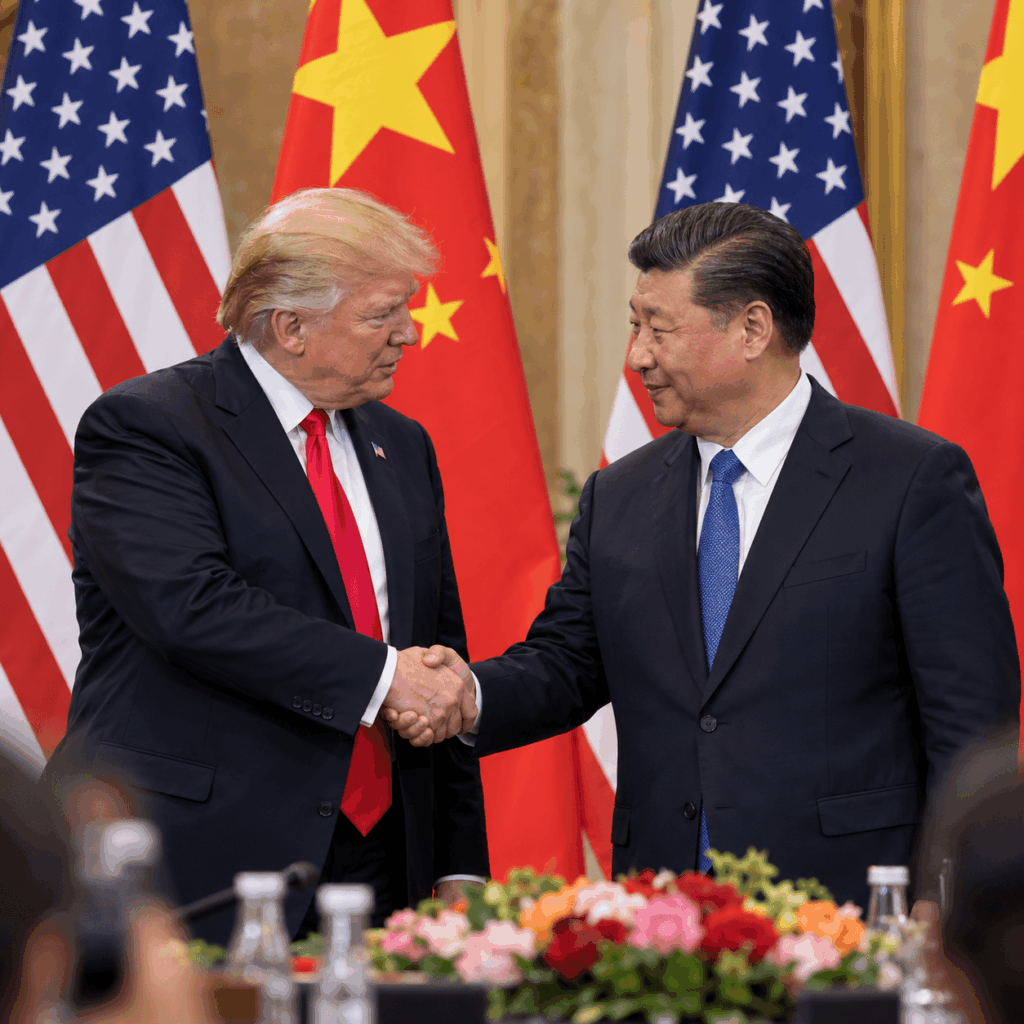
The United States and China have reached a series of new understandings covering trade, artificial intelligence, military communication and international issues following Chinese President Xi Jinping’s three-day state visit to Washington, in the latest attempt by the world’s two largest economies to stabilize a relationship that has been marked by years of strategic and economic tensions.
The summit between Xi and U.S. President Donald Trump, which concluded on September 25, did not produce a comprehensive new trade agreement. However, both governments announced a number of concrete steps, including a proposed $30 billion reciprocal tariff-reduction arrangement, the creation of a trade council and the establishment of a new bilateral dialogue on artificial intelligence.
The two countries also agreed to create a communication mechanism for AI-related incidents and to work toward stronger crisis communication between their militaries. The announcements came as Washington and Beijing continue to compete over trade, technology, supply chains, advanced computing and strategic influence.
$30 Billion Tariff-Reduction Arrangement
One of the most significant outcomes of the summit concerns tariffs.
According to statements from both governments, the United States and China agreed to work toward more favorable tariff treatment for approximately $30 billion worth of non-sensitive goods in each direction.
The White House said the proposed reductions would cover selected American exports to China, including agricultural products, wood and cosmetics, while Chinese goods entering the United States that could receive lower tariffs include products such as small appliances, toys and decorations.
The announcement does not represent a complete removal of tariffs between the two countries. Instead, it is part of a broader process designed to reduce trade barriers on selected categories of goods while the two governments continue negotiations over their wider economic relationship.
China and the United States have been negotiating a broader trade framework for months. The latest agreement builds on earlier discussions and extends a trade truce that had been scheduled to expire on November 10.
U.S. Treasury Secretary Scott Bessent said earlier in the week that the two sides had agreed to extend the existing trade arrangement by two months, providing additional time for negotiations over a potentially larger agreement.
New Trade Council to Oversee Economic Issues
The summit also produced agreement on establishing and advancing a China-U.S. trade council.
The mechanism is intended to provide officials from both countries with a structured forum for discussing bilateral economic issues. China’s government said the two sides had recognized the work of their economic teams and endorsed the outcomes of recent consultations, including the establishment of the trade council and the tariff-reduction arrangement.
The creation of such a mechanism is significant because trade disputes between Washington and Beijing have increasingly involved more than traditional tariffs.
Issues including technology exports, rare-earth minerals, agricultural products, industrial goods, supply chains and market access have become part of the broader economic relationship.
The two countries therefore face a complicated task: maintaining trade and economic links while simultaneously addressing national-security concerns and competition in strategic technologies.
Artificial Intelligence Becomes a Major Part of the Relationship
Another important outcome of the summit was the decision to establish a formal China-U.S. AI Dialogue.
The two countries agreed to use the dialogue to discuss both the risks and benefits associated with artificial intelligence, with the next round of discussions scheduled for November 2026.
They will also establish a bilateral communication channel specifically for AI-related incidents.
The development reflects the growing importance of AI in the relationship between Washington and Beijing.
Artificial intelligence is increasingly connected to economic competitiveness, military capabilities, cybersecurity, scientific research and advanced semiconductor technology. Both countries are investing heavily in AI infrastructure and development, while also imposing restrictions on certain technologies and exports.
The creation of an incident communication channel could become particularly important if the two countries experience an AI-related security event or technological incident that could otherwise escalate into a wider diplomatic dispute.
U.S. officials had already been discussing the idea of establishing protocols for AI emergencies before the summit. U.S. Treasury Secretary Scott Bessent said earlier in September that officials wanted discussions about risks including uncontrollable AI agents and malicious activity involving non-state actors.
Military Communication Also on the Agenda
Trade and AI were not the only areas where Washington and Beijing agreed to increase communication.
The Chinese government said the two militaries had agreed to work toward a memorandum of understanding on crisis communication and crisis prevention.
The objective is to strengthen communication between the two countries’ military establishments and reduce the risk that an unexpected incident could escalate.
The United States and China operate military forces in several areas where their interests overlap or compete, including the western Pacific. Their ships and aircraft have also operated in proximity during various military activities, making communication mechanisms an important part of crisis management.
The announced memorandum has not yet been presented as a comprehensive military agreement. Instead, it represents an effort to create additional channels through which officials can communicate during potentially dangerous situations.
Rare Earths Remain an Important Issue
Another major unresolved issue is access to rare-earth materials.
Rare earths are important components in a wide range of modern technologies, including electronics, electric vehicles, renewable-energy equipment and advanced military systems.
China has a dominant position in the global rare-earth supply chain, making the issue particularly sensitive for the United States and other industrial economies.
The White House said Washington and Beijing continued discussions concerning rare-earth supplies, with the goal of returning shipments to what it described as appropriate levels.
The issue illustrates why the trade relationship is more complicated than simply determining tariff rates.
Even if tariffs on selected consumer products decline, disagreements over strategic materials, technology and supply-chain security can continue to influence relations between the two countries.
China to Increase U.S. Coal Purchases
The White House also said China had agreed to purchase at least 10 million metric tons of U.S. coal in both 2027 and 2028.
The commitment is notable because energy trade has become another component of the wider U.S.-China economic relationship.
The coal agreement could provide additional demand for American producers while giving China another source of imported energy. However, the commitment is only one element of a much broader relationship involving oil, natural gas, manufacturing and renewable energy.
The announcement also comes at a time when energy security has become a major international issue because of continuing instability in the Middle East and disruptions affecting important shipping routes.
Fentanyl and Law-Enforcement Cooperation
The two countries also highlighted cooperation against illegal drugs and precursor chemicals.
According to China’s government, Chinese and U.S. law-enforcement agencies have recently worked together on cases involving new psychoactive substances and precursor chemicals, resulting in arrests in both countries.
The White House separately said China had added export controls covering two additional precursor chemicals associated with fentanyl production.
Counter-narcotics cooperation has become another area in which Washington and Beijing have attempted to maintain practical communication despite disagreements in other areas.
Iran and International Shipping Also Discussed
The Trump-Xi discussions were not limited to bilateral relations.
Both governments said the two leaders agreed that Iran should honor its commitment not to develop nuclear weapons and that no country or organization should impose transit tolls on international waterways.
The issue is particularly relevant because the Strait of Hormuz has experienced major disruption amid the ongoing Middle East conflict.
The waterway is one of the world’s most important routes for oil and gas shipments, and any prolonged disruption can have consequences for energy prices, shipping costs and economies far beyond the Middle East.
China is heavily dependent on energy imports from the region, making the stability of Middle Eastern shipping routes particularly important to Beijing.
The United States has also been involved directly in the wider conflict, while Iran has proposed a seven-day plan that it says could lead to the reopening of the Strait under certain conditions. The Trump administration has rejected Iran’s latest proposal, according to Reuters.
Taiwan Remains a Major Unresolved Issue
Despite the new agreements, major disagreements between Washington and Beijing remain.
One of the most sensitive issues is Taiwan, which China claims as part of its territory while Taiwan maintains its own democratic government and self-administered institutions.
The United States maintains an important relationship with Taiwan and provides weapons to the island, while Beijing strongly opposes what it considers moves toward Taiwanese independence.
The Trump-Xi summit did not resolve the fundamental disagreement over Taiwan.
The absence of a comprehensive settlement on such strategic issues demonstrates that the latest agreements are better understood as mechanisms for managing parts of the relationship rather than a complete end to U.S.-China competition.
What the Agreement Means for the Global Economy
The economic consequences of the summit could extend well beyond the United States and China.
The two countries together represent a substantial share of global economic activity. Changes in their tariff policies can affect manufacturers, exporters, retailers and consumers across Asia, Europe and other regions.
Companies with supply chains extending through China and the United States will be watching the implementation of the tariff reductions closely.
For exporters, lower tariffs on selected goods could improve market access. For consumers, reduced import costs can potentially lower prices for certain products, although the actual impact will depend on how the tariff changes are implemented and whether businesses pass the savings through.
Other countries could also be affected if American and Chinese companies alter sourcing strategies as trade conditions change.
AI Cooperation Could Have Wider Consequences
The agreement to establish a bilateral AI dialogue may prove particularly important over the longer term.
Artificial intelligence is developing rapidly, and governments are increasingly concerned about risks involving cybersecurity, autonomous systems, misinformation, privacy and the potential misuse of advanced AI models.
The United States and China are among the world’s leading AI powers. Their decision to establish a formal channel for discussing AI risks creates a mechanism through which officials can exchange information even while the countries remain competitors.
The November meeting will provide an early test of whether the new dialogue can move beyond general discussions and address specific technical or security concerns.
The countries have also agreed to create a mechanism for communicating about AI incidents, potentially giving officials a direct route to clarify events before misunderstandings develop into broader disputes.
More Meetings Planned for 2026
The summit will not be the final high-level contact between the two countries this year.
China is scheduled to host the APEC Economic Leaders’ Meeting in November, while the United States is scheduled to host the G20 Leaders’ Summit in December.
Both governments said the two leaders intend to attend each other’s meetings.
The two sides also agreed to continue their AI discussions in November.
These upcoming meetings could provide opportunities to assess whether the latest agreements are being implemented and whether additional economic or diplomatic arrangements can be reached.
A Step Toward Stability, but Not an End to Competition
The Trump-Xi summit has produced several concrete announcements, but it has not eliminated the underlying differences between the United States and China.
The two countries remain strategic competitors in technology, trade, military affairs and global influence. At the same time, their economies remain deeply interconnected, creating incentives for both governments to prevent disputes from escalating uncontrollably.
The newly announced $30 billion tariff-reduction arrangement, trade council, AI dialogue, AI incident channel and proposed military crisis-communication mechanism represent attempts to create practical areas of cooperation while broader disagreements continue.
For businesses and governments around the world, the most important question will now be implementation.
The coming months will show whether the tariff arrangements translate into measurable changes in trade, whether the AI dialogue produces concrete safety mechanisms and whether military communication channels can reduce the risk of escalation during future crises.
For now, the Washington summit has created several new mechanisms for engagement between the world’s two largest economies. It has not ended their strategic rivalry, but it has established additional channels through which the two sides can continue negotiating, managing disputes and addressing issues where their interests overlap.
Source note: This article is based primarily on Reuters reporting and official Chinese government statements published September 26–27, 2026. The $30 billion figure refers to the announced reciprocal tariff-reduction arrangement for non-sensitive goods, not a blanket removal of tariffs across all U.S.-China trade.