
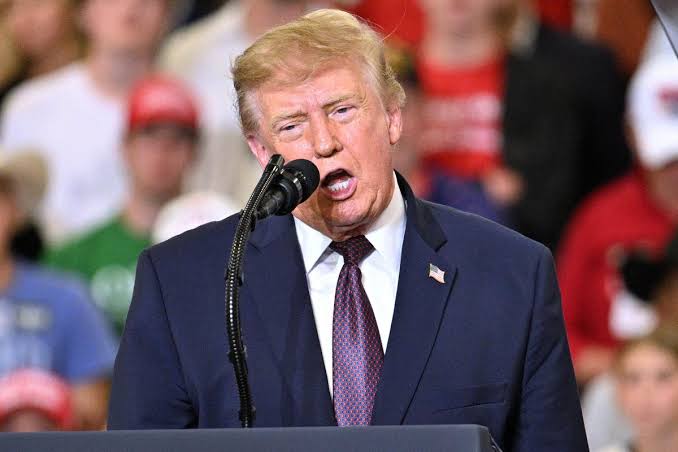
The political landscape in the United States has changed following the November 2026 midterm elections. The Democratic Party has secured control of both the House of Representatives and the Senate, creating a new challenge for President Donald Trump during the remaining two years of his term.
The election results reflect growing voter concerns about living costs, inflation, the Iran conflict and the administration’s trade policies. Trump’s tariffs and immigration restrictions have also attracted significant attention.
However, the consequences of this political shift extend beyond American borders. India has important economic and strategic interests in its relationship with the United States, particularly in international trade, technology, energy and immigration.
For Indian businesses exporting products to America, IT professionals seeking H-1B visas and consumers affected by international oil prices, one major question remains: Will Democratic control of Congress actually bring relief?
The answer is not straightforward. While the new Congress can increase scrutiny of Trump’s policies, the President retains substantial executive authority.
Democrats Win Control of Both Chambers of Congress
The November 2026 midterm elections delivered a significant political setback to the Republican Party.
Democrats won control of both the US House of Representatives and the Senate, giving them greater influence over legislation, government spending, investigations and congressional oversight.
According to election coverage by the Associated Press and Reuters, voter frustration over high prices, the Iran conflict and concerns about government policy contributed to the Democratic victory.
The incoming Congress is expected to take office on January 3, 2027. Until then, the outgoing Congress remains in place.
This change means Trump will face a Congress controlled by the opposition party during the final two years of his presidency.
Democrats can use their majorities to investigate administration decisions, question officials, scrutinise spending and challenge parts of the President’s legislative agenda. However, they cannot automatically cancel presidential executive orders or reverse every existing policy.
1. Will Indian Exporters Get Relief From US Tariffs?
One of India’s biggest concerns is the impact of American tariffs on Indian exports.
The United States is an important market for Indian businesses across several sectors, including textiles, pharmaceuticals, engineering goods, gems and jewellery, chemicals and other manufactured products.
Higher import duties can make Indian products more expensive for American buyers. This can reduce competitiveness, affect orders and create uncertainty for exporters.
A change in congressional control may increase pressure on the Trump administration to explain its trade decisions. Democratic lawmakers could organise hearings, investigate the economic impact of tariffs and question the administration’s approach to international trade.
However, this does not mean tariffs will automatically disappear.
The President retains significant authority over several aspects of US trade policy, including the use of executive powers and trade laws to impose tariffs.
Trade experts quoted by Financial Express have indicated that the Democratic victory is unlikely to immediately change Trump’s protectionist trade approach or remove pressure on India to negotiate a bilateral trade agreement.
For Indian exporters, the practical impact will depend on future tariff decisions, trade negotiations and the specific duties applied to different products.
What it means for India: Greater congressional scrutiny could encourage more discussion about trade policy, but exporters should not assume that lower US import duties are coming immediately.
2. What Does the Election Mean for Indian IT Professionals and H-1B Visa Holders?
Immigration policy is another major concern for Indian professionals working or planning to work in the United States.
Thousands of Indian technology professionals depend on employment-based immigration programmes, particularly the H-1B visa.
Changes to visa fees, employer requirements, wage rules and green-card procedures can directly affect Indian workers and technology companies.
The Trump administration’s proposed and existing immigration measures have created uncertainty for employers and applicants.
Following the midterm elections, Democratic lawmakers may use congressional hearings and investigations to question the Department of Homeland Security and other agencies about immigration enforcement and visa-related decisions.
They may also examine the financial and administrative impact of proposed H-1B fees.
However, congressional control does not automatically change immigration rules.
The President and federal agencies retain significant authority over immigration policy. Congress can introduce legislation, influence government funding and conduct oversight, but major legislative changes could face a presidential veto.
Immigration policy also involves ongoing court cases and regulatory proceedings.
For example, a proposed $103,000 H-1B fee for certain cap-subject petitions was reported as a proposal in November 2026, rather than an implemented general requirement. A separate $100,000 payment requirement had also faced court challenges and was blocked under relevant court orders.
For Indian IT professionals, the situation therefore remains uncertain.
What it means for India: Democratic control could increase scrutiny of restrictive immigration measures, but Indian applicants should continue checking official US immigration announcements rather than expecting immediate visa relief.
3. Can Democrats’ Victory Reduce Petrol and Diesel Prices in India?
Energy prices are another important part of the India-US relationship.
India imports a substantial share of its crude oil requirements, making domestic fuel prices sensitive to international crude prices, currency movements, shipping costs and geopolitical developments.
The US-Iran conflict has become an important factor in international energy-market uncertainty.
Any escalation in tensions involving Iran and other Middle Eastern countries can affect oil production, transportation routes and global supply expectations.
A Democratic-controlled Congress could increase pressure on the Trump administration to explain its military strategy and review the funding associated with the Iran conflict.
Congressional oversight and budget negotiations may influence how the administration approaches the conflict.
However, the US midterm results alone cannot guarantee lower global crude oil prices.
Oil prices depend on several factors, including:
- Global crude oil supply and demand.
- Production decisions by major oil-producing countries.
- Geopolitical tensions in the Middle East.
- Shipping routes and transportation costs.
- US and international sanctions.
- Currency exchange rates.
Even if political pressure contributes to a change in US foreign policy, the impact on Indian petrol and diesel prices would depend on how international energy markets respond.
What it means for India: A reduction in geopolitical tensions could support more stable energy markets, but cheaper fuel in India is not an automatic consequence of the Democratic victory.
4. What About US Sanctions and India’s Russian Oil Purchases?
India’s energy relationship with Russia is another sensitive issue.
Indian refiners have purchased Russian crude oil as part of their strategy to secure supplies from different international sources.
However, US sanctions and restrictions related to Russia have created uncertainty for countries and businesses involved in the energy trade.
A Democratic-controlled Congress could increase scrutiny of sanctions policy and question how restrictions affect international energy markets and relations with countries such as India.
Nevertheless, the President and relevant US agencies retain important powers over foreign policy and sanctions implementation.
Congress can legislate and influence funding, but it cannot automatically remove existing sanctions through a change in party control.
For India, the situation will depend on future US decisions, international diplomatic developments and the availability and commercial attractiveness of alternative oil supplies.
Indian refiners will continue to consider price, reliability, shipping and compliance risks when making purchasing decisions.
5. Will India-US Trade Relations Become More Predictable?
India and the United States share important economic interests, including technology cooperation, investment, manufacturing and international trade.
A more closely scrutinised US trade policy could create opportunities for discussions about transparency and predictability.
However, the Democratic victory does not necessarily mean that the United States will abandon its protectionist trade approach.
Both political parties have supported different forms of domestic industrial protection and stronger American manufacturing at various times.
This means Indian businesses should not assume that a change in congressional leadership will automatically produce a more favourable trade environment.
The proposed India-US bilateral trade agreement will remain an important issue.
Negotiations may continue, but the final outcome will depend on the priorities of both governments, including tariffs, market access, agricultural trade and regulatory conditions.
Indian exporters should therefore continue diversifying markets and strengthening their supply chains instead of depending entirely on a possible change in US policy.
6. Why Does the President Still Have So Much Power?
A common misunderstanding about the US midterm elections is that winning control of Congress gives the opposition party complete control over the government.
That is not how the American political system works.
The United States has separate executive, legislative and judicial branches.
The President leads the executive branch, while Congress makes federal laws, approves spending and conducts oversight. Courts can review government actions and determine whether particular policies comply with the law.
Even with Democrats controlling both chambers, Trump remains President and retains important executive powers.
Democrats can:
- Investigate administration policies and decisions.
- Hold hearings and demand documents from officials.
- Challenge spending proposals.
- Block or delay certain appointments.
- Introduce legislation to change existing laws.
- Use congressional oversight to scrutinise immigration and trade measures.
However, legislation passed by Congress can face a presidential veto. Overriding that veto generally requires a two-thirds majority in both chambers.
This makes major policy changes difficult without cooperation across political parties.
Reuters reported that legislative deadlock could become a major feature of the next two years.
7. What Should Indian Businesses and Professionals Watch Next?
The impact of the US midterm elections will become clearer through actual policy decisions rather than election results alone.
Indian exporters should monitor announcements about tariffs, trade negotiations and product-specific import duties.
IT professionals should follow official updates from US immigration agencies, particularly regarding H-1B fees, wage requirements, employment authorisation and green-card procedures.
Oil companies and consumers should watch international crude prices, developments involving Iran and Russia, and changes to US sanctions.
For the Indian government, maintaining stable diplomatic and economic relations with Washington will remain important regardless of which party controls Congress.
Final Words: Will India’s Exporters, IT Workers and Oil Consumers Get Relief?
The Democratic victory in the 2026 US midterm elections has changed the balance of political power in Washington. It gives the opposition greater opportunities to question Trump’s policies and increase scrutiny of decisions affecting trade, immigration and foreign relations.
However, the change should not be mistaken for an immediate policy reversal.
Indian exporters may continue to face tariff uncertainty. IT professionals may still encounter immigration-related challenges. Oil consumers will remain exposed to international crude prices and geopolitical developments.
The biggest potential change is increased political oversight and pressure on the administration, rather than guaranteed economic relief for India.
For Indian businesses, workers and consumers, the coming months will be important. The real impact will depend on what the new Congress does after January 2027 and how the Trump administration responds.
Will the Democrats’ victory make India-US economic relations more predictable, or will trade and immigration uncertainty continue?